Closed · opens tomorrow 8 AM Hours provisional — call to confirm
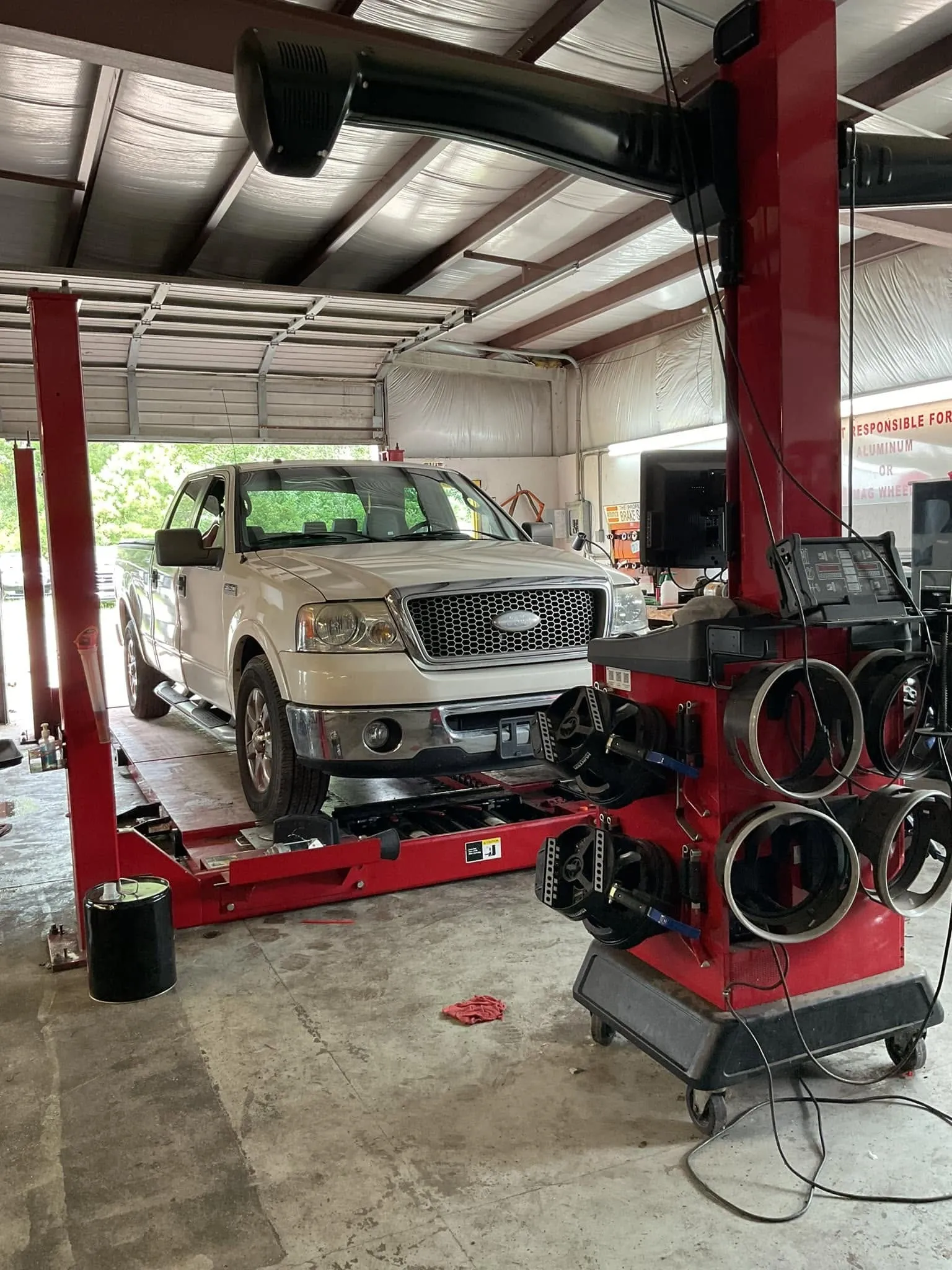
An in-house alignment rack sets your vehicle back to factory spec, protecting your tires and keeping the ride straight and stable.
A wheel alignment sets the angles of your wheels back to the vehicle manufacturer’s specification, so all four tires point the direction you’re steering and share the road evenly. When alignment drifts out of spec, you’ll usually notice it before you see it on a tire: a pull to one side, a steering wheel that’s slightly off-center, or a vibration that wasn’t there before.
At Riverside Automotive, we check and adjust alignment on our in-house rack rather than sending vehicles out or estimating by eye. We measure camber, caster, and toe against factory spec, which tells us exactly how far out — and in which direction — your vehicle has drifted. A hard hit on a pothole or curb may indicate a bent component rather than a simple alignment issue, so we check for that too before adjusting anything.
Alignment and tires work together. Misalignment wears tread unevenly and shortens the life of a new set, so we often recommend checking alignment whenever you’re replacing tires — and we’ll flag it if we notice uneven wear during a tire or brake visit. It’s a small step that protects a bigger investment.
Coastal roads and daily commuting around Shallotte add up over time, and alignment can shift gradually without any single dramatic event. Once we’ve made the adjustment, we road-test the vehicle to confirm it tracks straight and the steering wheel sits centered before you drive off.
These are common signs — a real inspection is what confirms the cause.
We measure first. If your alignment angles are out of spec, we'll show you the readings — that's what tells us whether the fix is an alignment, a suspension repair, or both.
It can, but not always. A hard hit is a good reason to have it checked, since it may indicate a bent component rather than just an alignment adjustment.
Tell us what your vehicle is doing and we’ll take it from there — an appointment request only takes a minute, or call and talk to a real person.